Seawide logo

COMBINED – V SERIES

General Information

Input types:

Types of triggers:

Table of Contents

Reggiana Riduttori – Combined V Series

Combined V – Overview

Combined V Series is a modular drivetrain solution that integrates helical and planetary gear stages into a single, compact system designed for demanding industrial and OEM applications.

By combining the flexibility of the V Series helical gearboxes with the high torque density of planetary reduction stages, the Combined V Series delivers optimized power transmission where space, reliability, and system efficiency are critical.

This solution is engineered for applications requiring:

  • High torque capability in reduced installation space
  • Modular configuration to adapt to different machine architectures
  • Reliable operation under continuous and heavy-duty conditions

The Combined V Series is not a standalone gearbox, but a system-oriented solution developed to simplify drivetrain layouts, reduce component count, and improve overall machine integration.
System Architecture Overview 

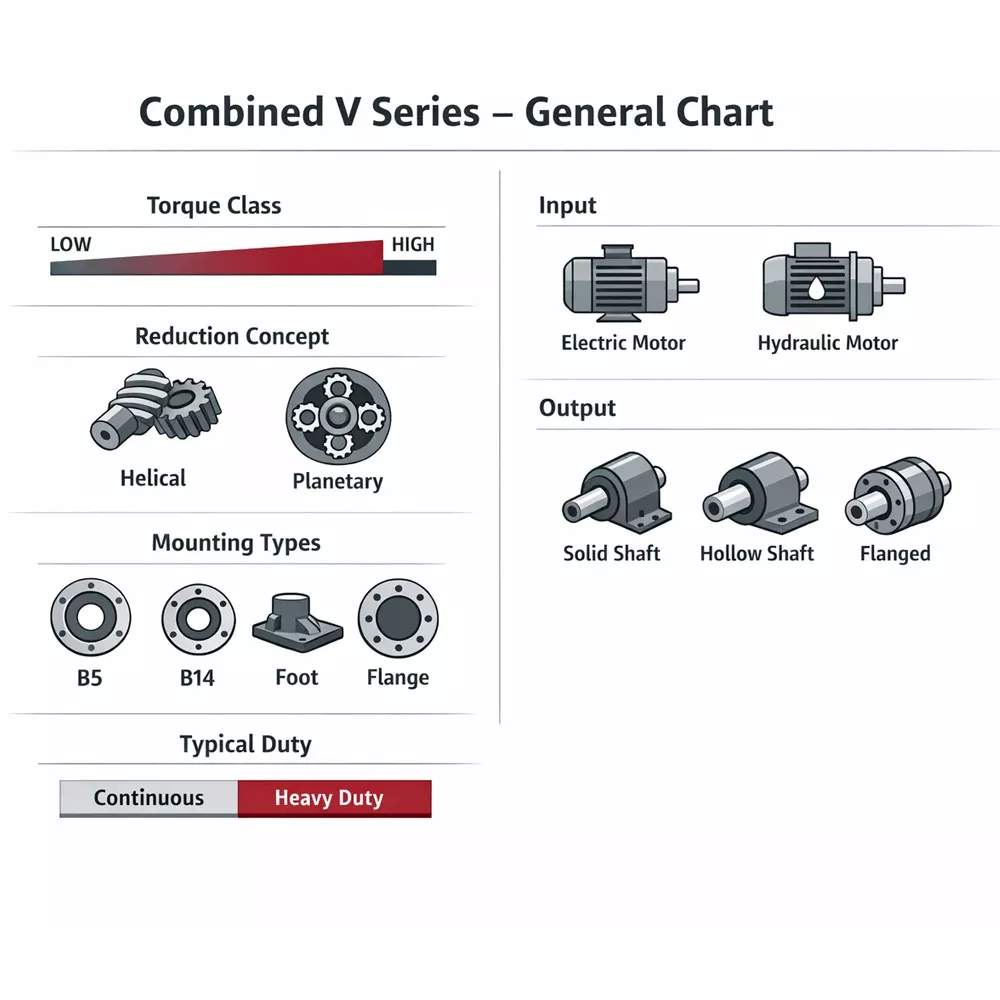
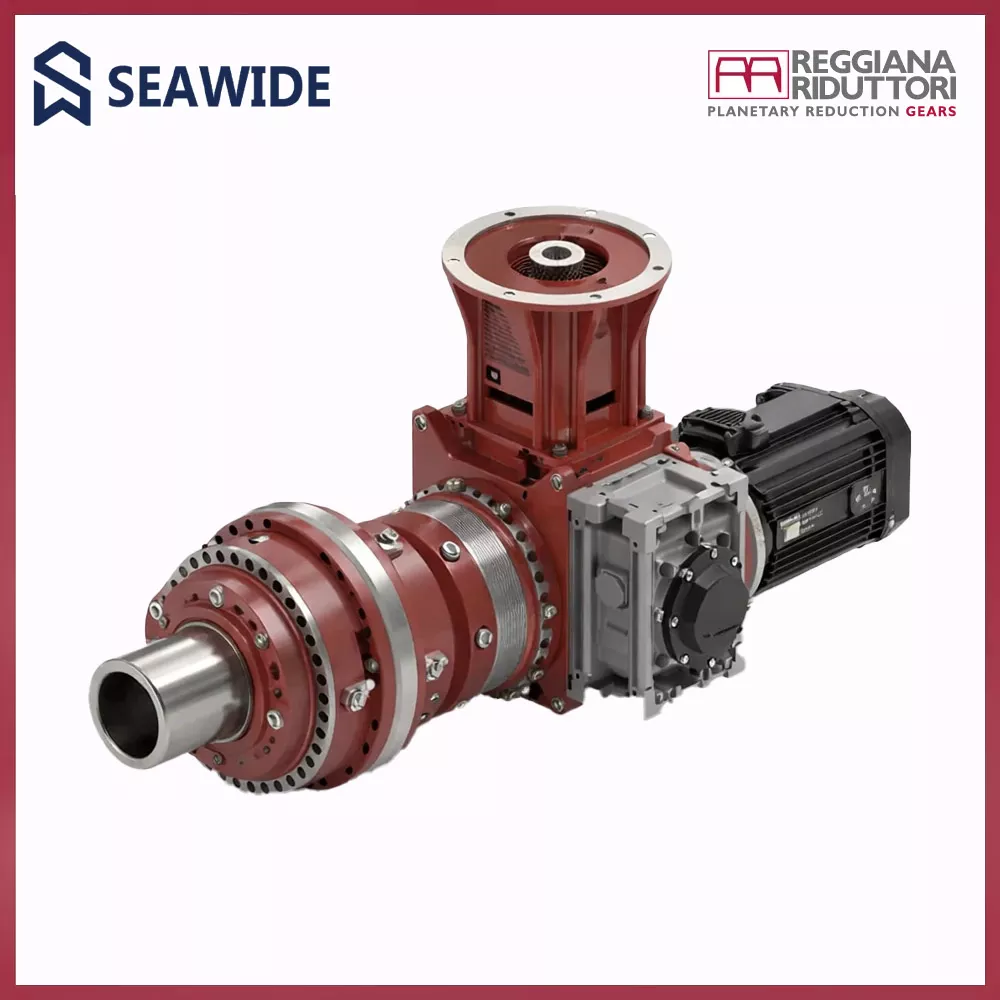
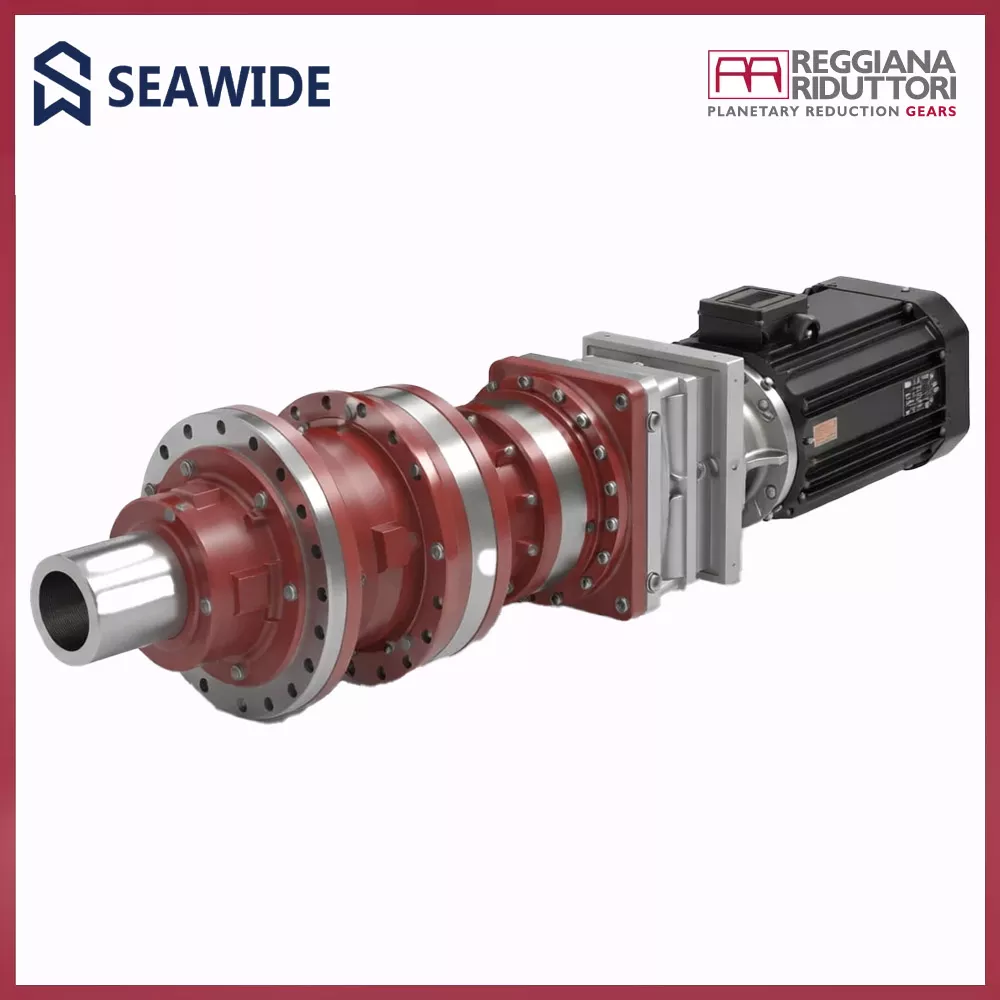
Combined V Series is engineered as an integrated transmission architecture that couples a high-efficiency helical stage with a high-torque planetary stage, creating a compact “system gearbox” that is easy to adapt to different machines and duty cycles.
1) Core architecture (block logic)

  • Prime mover / Input: typically an electric motor (or other prime mover) connected via standardized input interfaces.
  • Helical pre-stage (speed adaptation): provides smooth, efficient reduction and noise-controlled power transfer; it also conditions the load for the next stage.
  • Planetary final stage (torque density): delivers high output torque in a short axial length, distributing load across multiple planets for durability.
  • Output interface: flange/shaft/hub style output depending on application—optimized for torque transfer and structural stiffness.

2) Why this combined architecture matters

  • Compactness without sacrificing torque: the planetary stage gives high torque density; the helical stage helps manage speed ratio and efficiency.
  • Modular integration: the architecture supports multiple combinations (input layouts, mounting styles, outputs) while keeping a consistent “platform.”
  • System-level robustness: load paths are designed to handle both torque transmission and the mechanical reaction forces generated by mounting and duty cycles.

3) Integration points (what the machine designer “connects to”)

  • Mechanical: mounting face(s), output flange/shaft, optional reaction arms or torque supports (depending on configuration).
  • Serviceability: lubrication access points, inspection/service zones, sealing interfaces.
  • Options layer: brakes, sensors, backstops, cooling/lubrication variants—implemented as architecture “add-ons” rather than one-off redesigns.

Power Transmission Role

Combined V Series acts as the core torque-and-speed conversion element in a drivetrain, transforming the prime mover’s high-speed/low-torque input into a controlled low-speed/high-torque output suitable for heavy-duty work cycles.

1) What it does in the drivetrain (functional role)

  • Reduces speed / multiplies torque across a wide operating envelope, enabling the machine to move, lift, rotate, or process loads under continuous or intermittent duty.
  • Stabilizes the transmission chain by managing torsional reactions and load variations before they reach the driven equipment.
  • Enables compact system layouts by integrating stages (helical + planetary) into one architecture, reducing the need for extra reducers, couplings, or external stages.

2) How the combined stages support this role

  • Helical stage (efficiency + smoothness): provides efficient pre-reduction with low noise and stable power transfer—ideal as a “conditioning” stage upstream.
  • Planetary stage (torque density + robustness): delivers high torque in minimal volume, with load sharing across multiple planets for improved durability and overload tolerance.
  • Output interface (application adaptation): flange/shaft options allow direct connection to drums, wheels, slewing elements, conveyors, mixers, etc., with high structural stiffness.

3) System outcomes (what the OEM gains)

  • Higher torque per package size (system-level compactness)
  • Cleaner integration (fewer transmission elements, fewer interfaces to align)
  • More repeatable selection (platform logic across mounting/input/output variants)
  • Duty-cycle readiness for shock loads and variable load profiles (when correctly selected with service factors and thermal limits)

Typical Applications

Helical / Bevel‑Helical Gearboxes Combined with Planetary Reduction Stages

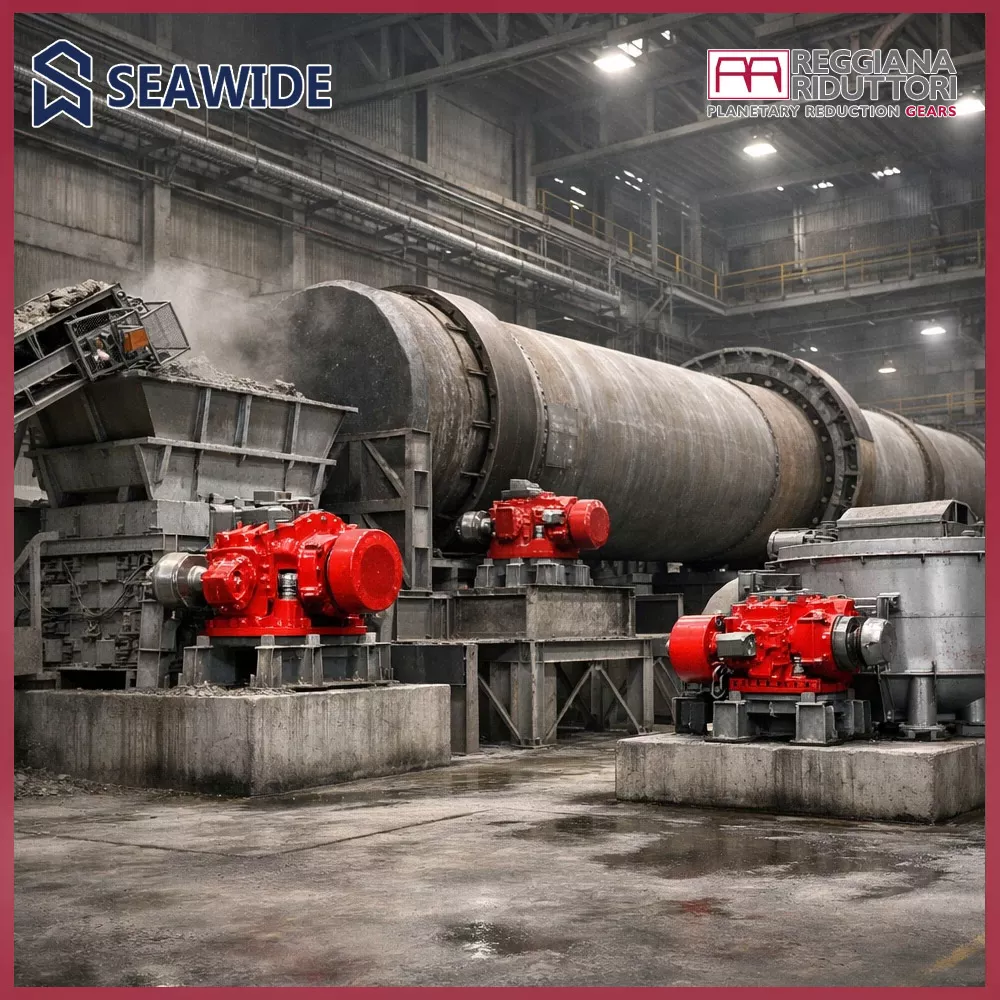
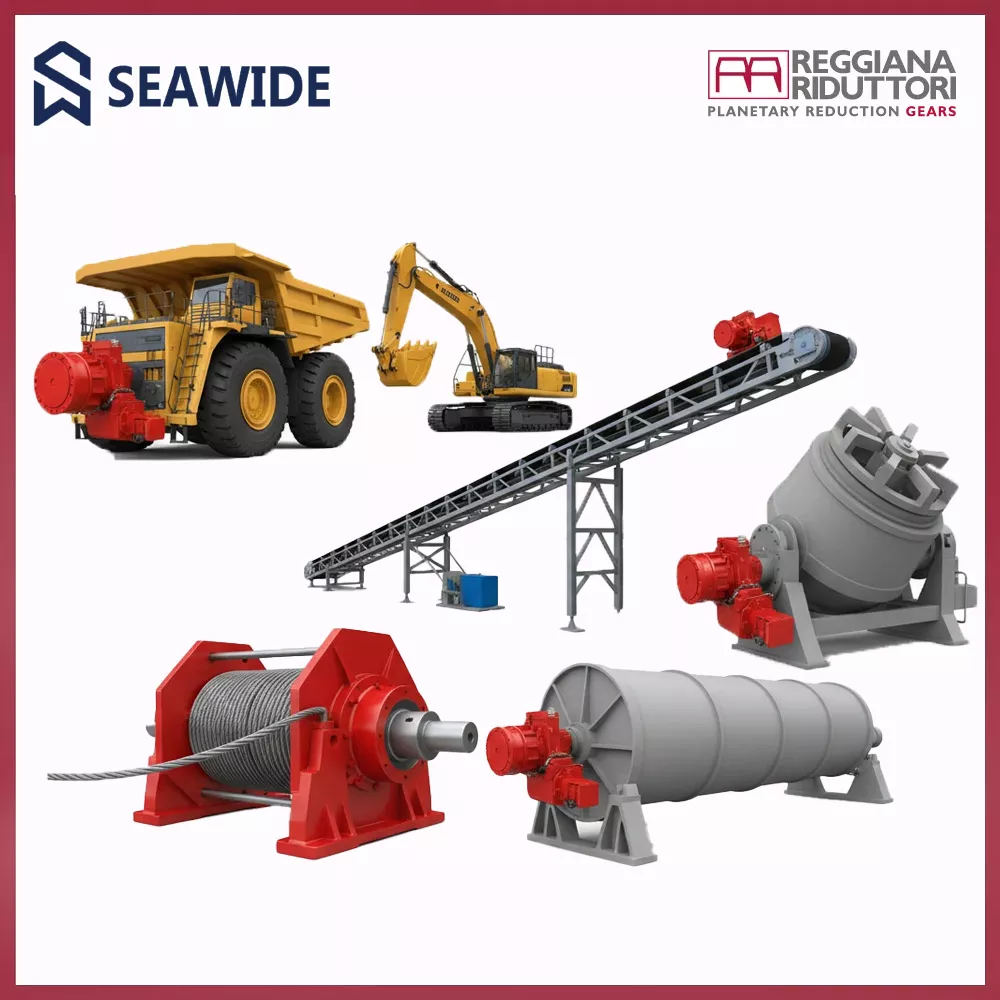
The COMBINED – V SERIES is engineered for heavy‑duty industrial applications where very high torque, compact architecture, and flexible system configuration are required. By integrating planetary reduction stages with helical or bevel‑helical gear units, this series provides an optimal balance between power density, efficiency, and mechanical robustness.
Bulk Material Handling Systems

  • Belt conveyors and overland conveyors
  • Apron conveyors and chain conveyors
  • Stackers and reclaimers
  • Bucket elevators These systems benefit from the high torque capability and compact layout of the combined architecture, especially in long‑duty cycles and high load start‑up conditions.

Mining and Quarrying Equipment

  • Crushers (jaw, cone, and impact crushers)
  • Grinding mills and mineral processing units
  • Feeders and heavy-duty extraction systems In mining environments, the COMBINED – V SERIES ensures reliable power transmission under shock loads, abrasive conditions, and continuous operation.

Cement and Building Materials Industry

  • Rotary kilns
  • Ball mills and vertical mills
  • Crushers and raw material handling systems The combined gear solution allows high reduction ratios while maintaining mechanical efficiency and structural rigidity in high‑temperature and high‑load processes.

Steel and Metal Processing Plants

  • Rolling mill auxiliary drives
  • Cooling bed conveyors
  • Ladle handling and transfer systems Here, precise torque control, resistance to overloads, and long service life are essential, making the COMBINED – V SERIES a suitable solution.

Energy and Power Generation Systems

  • Biomass handling conveyors
  • Waste‑to‑energy processing lines
  • Auxiliary drives in power plants The modular configuration supports integratio with electric motors and adapts easily to different plant layouts and power requirements.

Heavy Industrial Machinery

  • Mixers and agitators
  • Large industrial winches
  • Special process machines Custom configurations of the COMBINED – V SERIES allow optimization for specific torque, ratio, and mounting constraints.

Technical Concept

Integrated Helical / Bevel‑Helical and Planetary Gear Architecture

The COMBINED – V SERIES is based on a multi‑stage power transmission concept that integrates conventional gear units (helical or bevel‑helical) with one or more planetary reduction stages, forming a compact and mechanically optimized drive system for high‑torque industrial applications.

Multi‑Stage Torque Architecture

The technical core of the COMBINED – V SERIES lies in the functional separation of speed reduction and torque amplification:

  • The primary gear stage (helical or bevel‑helical) manages input speed adaptation, shaft orientation, and load distribution.
  • The planetary stage(s) provide high torque multiplication with excellent load sharing across multiple planet gears.

This architecture enables very high torque transmission within a reduced installation footprint.

Load Distribution and Structural Integrity

Planetary stages ensure:

  • Uniform torque distribution across multiple contact points
  • Reduced stress concentration on individual gear teeth
  • High resistance to shock loads and torque peaks

The housing structure is designed to support combined radial and axial loads, ensuring long service life under continuous industrial duty.

Efficiency and Thermal Behavior

By combining optimized gear meshing geometry with rigid housings:

  • Mechanical losses are minimized across all stages
  • Thermal stability is improved under high load conditions
  • Continuous operation is possible without performance degradation

This makes the COMBINED – V SERIES suitable for heavy‑duty, long‑cycle applications.

Modular and Configurable Design

The system is developed with a modular logic, allowing:

  • Multiple gear combinations (inline or right‑angle)
  • Integration with electric motors, couplings, or brake units
  • Custom mounting configurations according to machine layout

Each configuration is engineered as a single mechanical system, not as independent components assembled afterward.

Designed for Industrial Environments

All components are engineered for operation in:
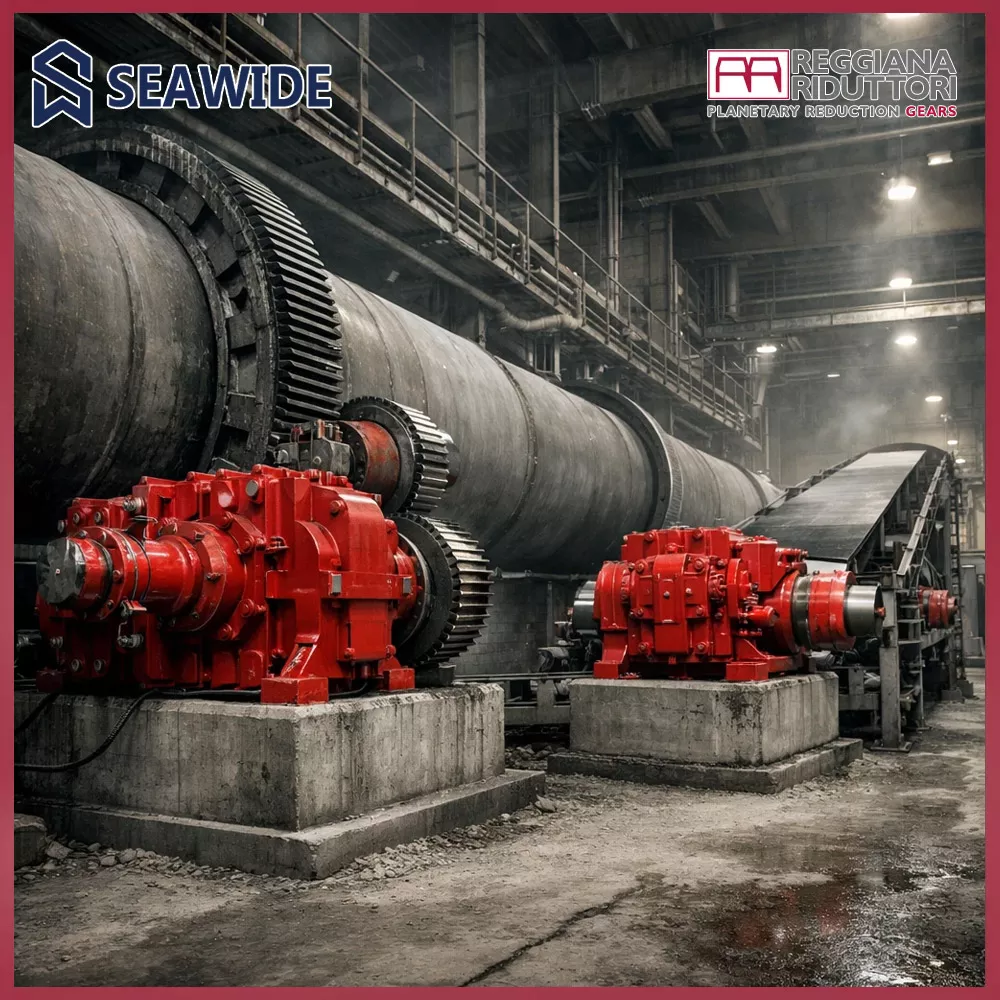
  • Dusty and abrasive environments
  • High vibration conditions
  • Continuous and cyclic load regimes

Options & Integrations

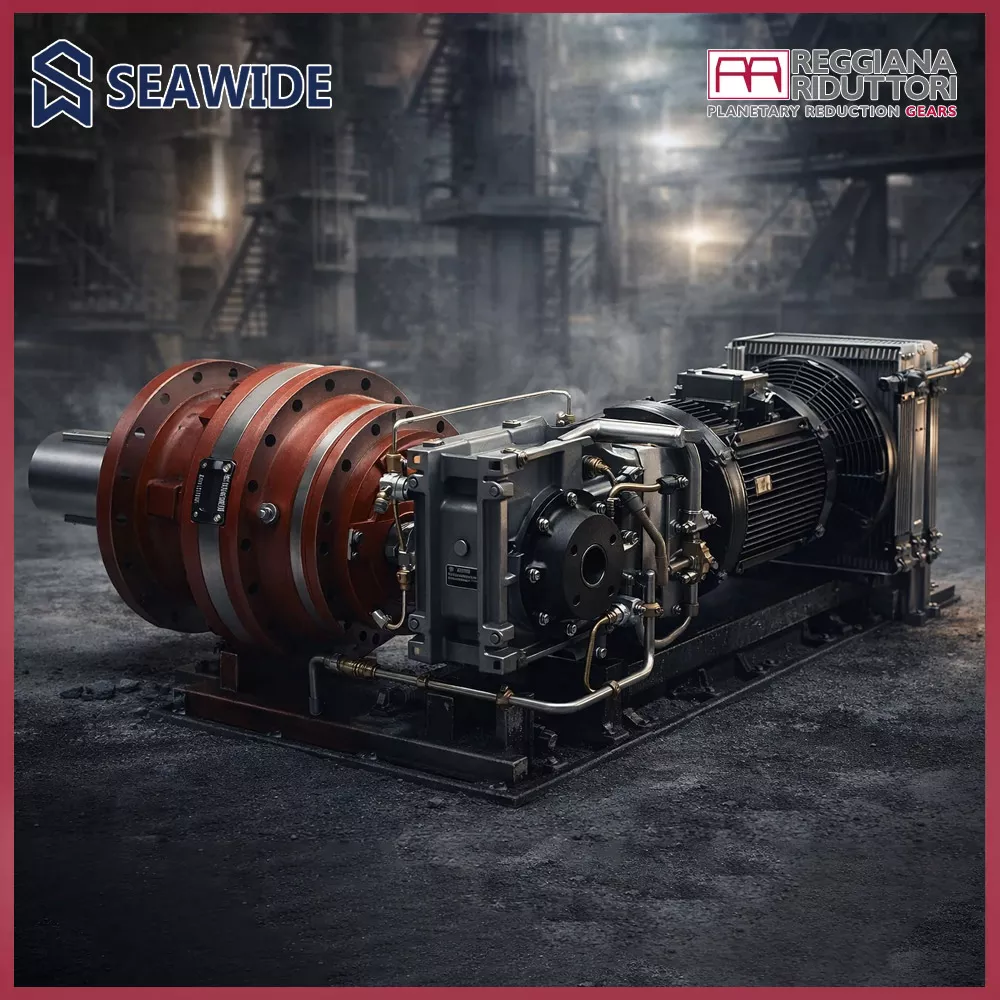
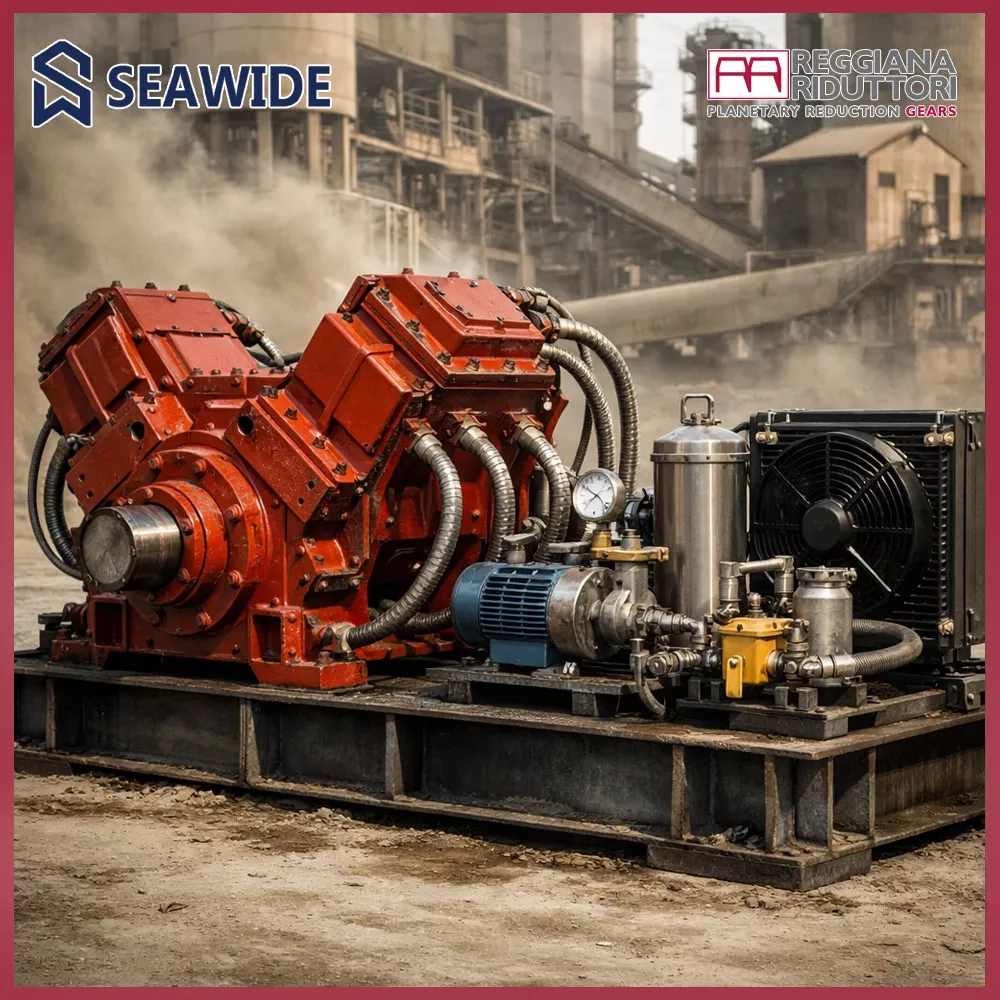
Combined V Series is designed as a configurable drive platform, enabling seamless integration into heavy‑duty industrial systems while keeping installation footprint compact and maintenance access straightforward. Options are engineered to enhance thermal stability, uptime, safety, and condition‑based maintenance—without compromising torque density.

Integration scope (what can be combined)

  • Input integrations: IEC motor adapters, flexible coupling solutions, or shaft input arrangements depending on the prime mover and layout constraints.
  • Output / mounting integrations: foot/flange mounting, torque arm arrangements (where applicable), and customized interfaces for drums, girth gears, mills, or crusher drives.
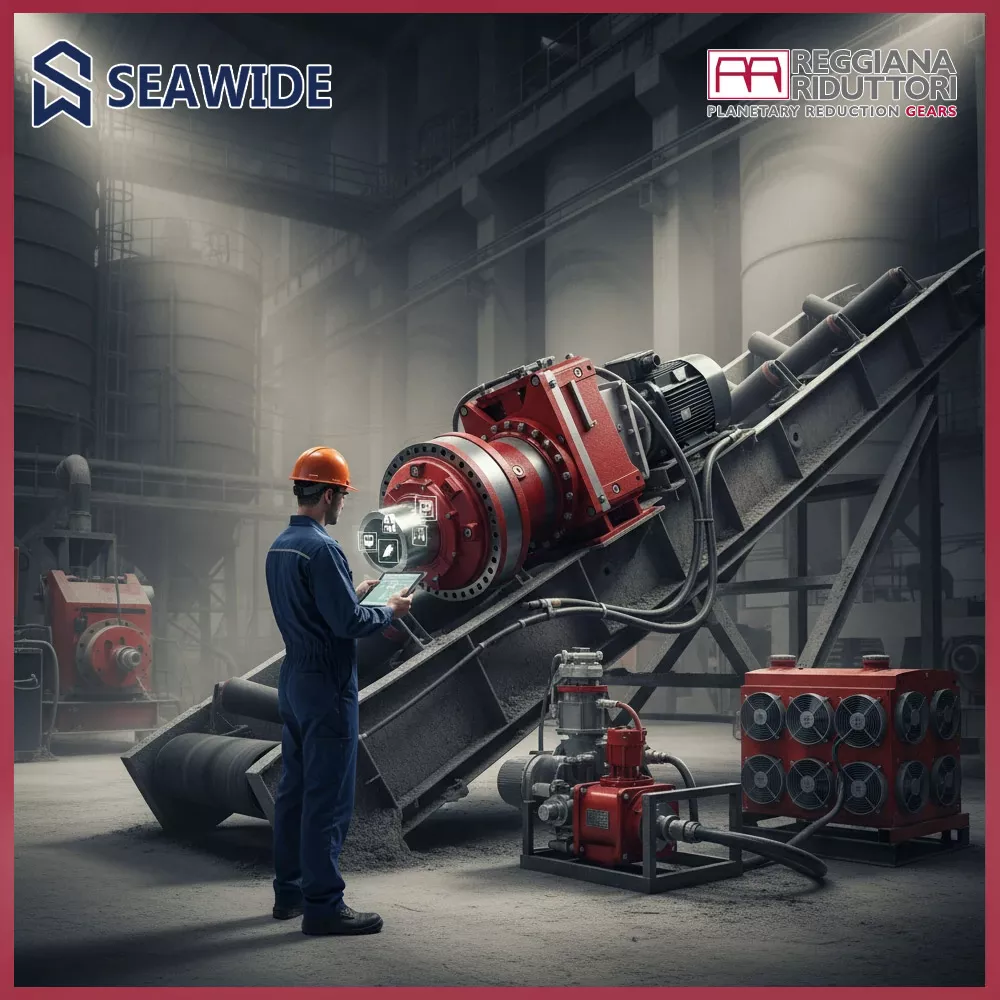
  • Auxiliary systems integration: lubrication skids, cooling circuits, filtration, and instrumentation connected as a single drive package.

Key options (typical)

  1. Electric motor integration (electrification-ready)

    Motor interface solutions for direct mounting, optimized alignment, and reduced installation complexity—ideal for modern electrified plants and retrofit projects.

  2. Braking & backstop solutions

    • Service braking packages for controlled stopping
    • Backstop/holdback devices for anti‑reverse protection on inclined conveyors and high-inertia systems
  3. Thermal management (cooling)

    • Oil coolers (air/oil or water/oil, application dependent)
    • Forced lubrication circulation to stabilize temperature under continuous duty cycles
  4. Lubrication & filtration packages

    Auxiliary oil pump, filtration, and external piping designed for long duty cycles, improved cleanliness class, and easier oil service operations.

  5. Condition monitoring & sensors

    Integration points for vibration, temperature, and speed monitoring to enable predictive maintenance strategies and reduce unplanned downtime.

  6. Sealing, protection & environment adaptations

    Reinforced sealing solutions, protective guards, and corrosion‑resistant treatments for dusty/hot industrial environments (cement, steel, mining).
Engineering outcome

  • Faster installation through pre‑engineered interfaces
  • Higher availability via thermal control + monitored operation
  • Improved safety and drivetrain protection with brake/backstop options
  • Cleaner system design by consolidating gearbox + auxiliaries into one coherent package

Configuration & Selection Logic

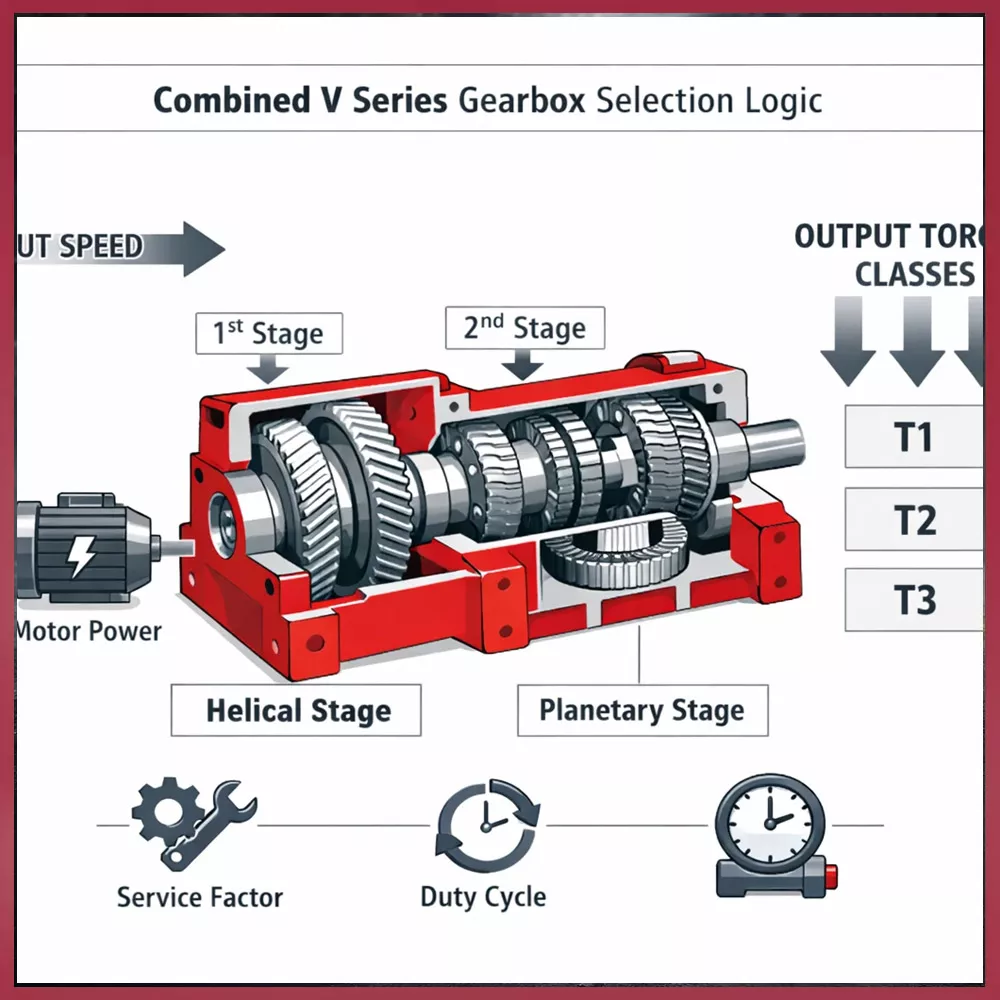
Combined V Series is configured by matching the load profile and installation architecture to the most efficient helical + planetary combination. The goal is to achieve the required output torque and speed with the right safety margin, thermal balance, and interface geometry—without oversizing.

Step 1 — Define the application duty

Start from the real operating conditions (not only nameplate power):

  • Required output speed n2n_2
  • Required output torque T2T_2 (including peaks)
  • Duty cycle, starts/hour, reversing, inertia, shock level
  • Ambient conditions (temperature, dust), mounting position

Step 2 — Convert duty into selection factors

  • Apply a service factor to account for application severity and site conditions (shock, duty class).
  • Verify thermal capacity for continuous operation (especially at low speed / high torque).

Step 3 — Select the configuration architecture

Choose the most suitable system layout before final sizing:

  • Input configuration: motor adapter / shaft input / coupling solution
  • Stage split: helical stage for efficient speed reduction + planetary stage for high torque density
  • Mounting & output interface: foot/flange, custom output, space constraints

Step 4 — Determine ratio and size window

  • Target reduction ratio i≈n1n2i \approx \frac{n_1}{n_2}
  • Select the Combined V size that provides:
    • Required T2T_2 with adequate safety margin
    • Compatible ratio range (without pushing the extremes)
    • Acceptable bearing loads and shaft forces for the driven machine

Step 5 — Validate system checks (must-pass)

  • Mechanical checks: output overhung load, axial loads, base stiffness, misalignment limits
  • Thermal checks: oil temperature stability, cooler/lubrication needs
  • Reliability checks: lubrication method, sealing, contamination control
  • Integration checks: brakes/backstops (if needed), sensors, maintenance access

Step 6 — Freeze the package (options)

Finalize the drive package as an integrated solution:
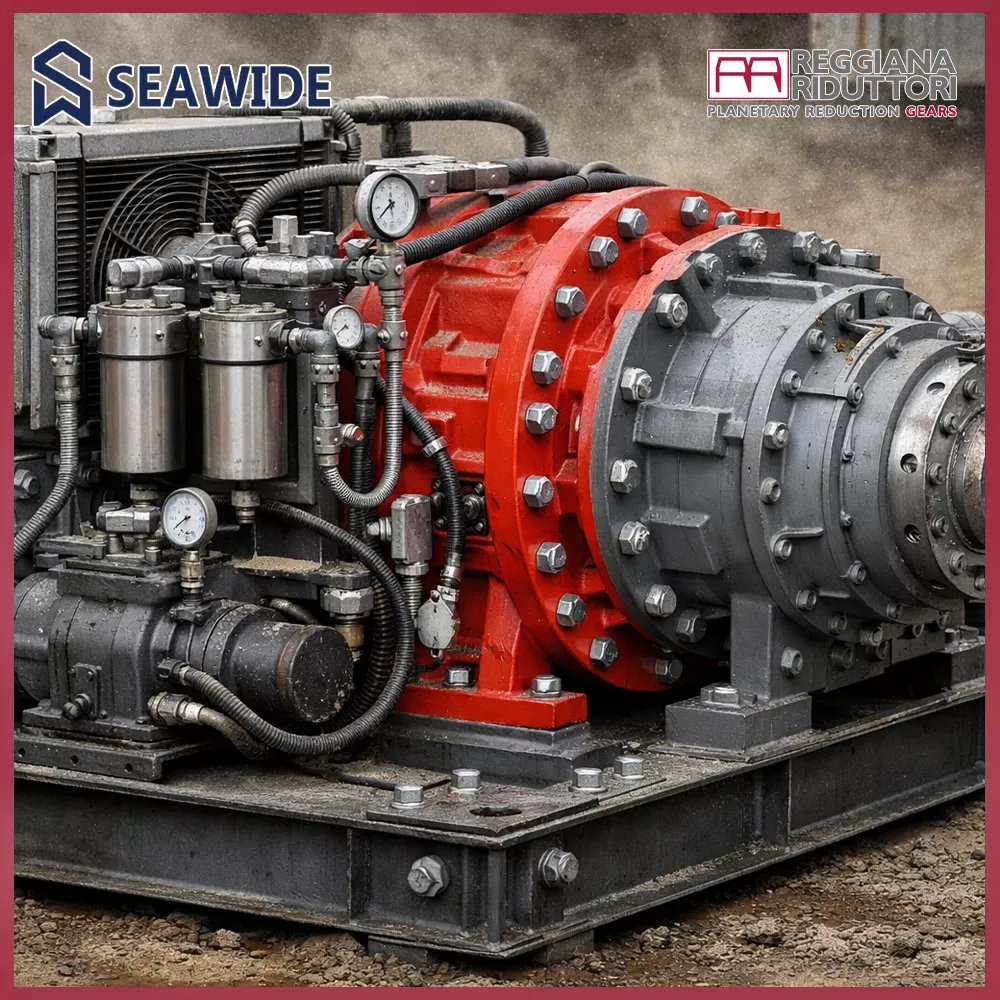
  • Cooling & forced lubrication skid (when duty requires)
  • Filtration level, oil type, condition monitoring points
  • Brake/backstop and safety accessories
  • Paint/protection for harsh environments

Reliability & Compliance

Combined V Series is engineered as a packaged drive system for harsh-duty service, where reliability is driven by the whole transmission architecture (helical/bevel-helical + planetary), not only by the gearbox core. The design intent is to deliver stable torque, predictable thermal behavior, and long service intervals under variable loads, shocks, and contaminated environments.

Reliability by design (what makes it “industrial-duty”)

  • Stage specialization: the helical/bevel-helical section provides efficient speed reduction and layout flexibility, while the planetary stage provides high torque density and robust load sharing.
  • Structural stiffness & alignment control: housing geometry and interface faces are designed to keep mesh alignment stable under high torque and external loads, protecting bearings and gear flank contact patterns.
  • Bearing life & load management: configuration choices account for overhung and axial loads from couplings, pinions, drums, or driven shafts—reducing fatigue risk and micro-pitting triggers.
  • Thermal stability: reliability is treated as a thermal problem as much as a mechanical one. Selection must confirm oil temperature equilibrium, especially for low-speed/high-torque continuous duty.

Lubrication integrity (the reliability multiplier)

  • Correct lubrication regime (splash, forced lubrication, or hybrid) is selected based on speed, duty cycle, and mounting position.
  • Oil cleanliness is managed through filtration options when required; contamination control directly improves bearing life and gear surface durability.
  • Cooling readiness: for heavy continuous duty, the system is prepared for oil cooler / pump / skid integration to avoid thermal overstress and viscosity breakdown.

Sealing, contamination, and harsh environment readiness

  • Sealing strategy supports dusty, wet, or abrasive environments to prevent ingress and preserve lubricant quality.
  • Suitable surface protection / paint system can be specified for corrosive or outdoor installations.
  • Integration-friendly routing and protection for cables, sensors, and auxiliary lines helps avoid failures caused by vibration and accidental impacts.

Compliance & documentation (project and site acceptance)

Combined V Series packages can be delivered with the documentation and configuration discipline expected in industrial projects:

  • Traceable configuration (interfaces, options, auxiliary systems) to reduce site risk during commissioning.
  • Support for project requirements such as quality system alignment (e.g., ISO-based processes) and customer-specific acceptance checks.
  • Where applicable, the package can be prepared to support site safety and regulatory constraints via option selection (guards, monitoring points, controlled braking/backstop solutions, etc.).

Recommended “must-checks” before final release

  • Duty class + service factor confirmation (including peaks and starts)
  • Thermal balance verification (ambient, cooling, oil grade)
  • External loads (overhung/axial) and mounting stiffness
  • Lubrication method + filtration/cooling need
  • Access for maintenance (filters, cooler, oil sampling, sensors)
0/5 (0 Reviews)
Seawide logo